


(Published 3/18/19, updated 6/20/25)
What Is Physician “Burnout”—and Why It Matters
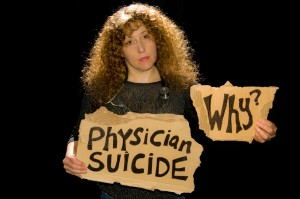
Physician “burnout” is a state of emotional, physical, and mental exhaustion caused by prolonged stress in the medical workplace. It’s a growing crisis affecting over half of all doctors in the U.S., and it has been linked to rising rates of physician depression, doctor suicide, and medical errors. Despite increasing attention to physician wellness, the rates of burnout continue to rise—especially among frontline clinicians, medical students, and residents.
Characterized by cynicism, exhaustion, and reduced job satisfaction, physician burnout can lead to devastating personal and professional consequences, including strained relationships, substance abuse, early retirement, and even suicide. Many doctors suffer in silence, reluctant to seek help due to stigma and fear of professional repercussions.
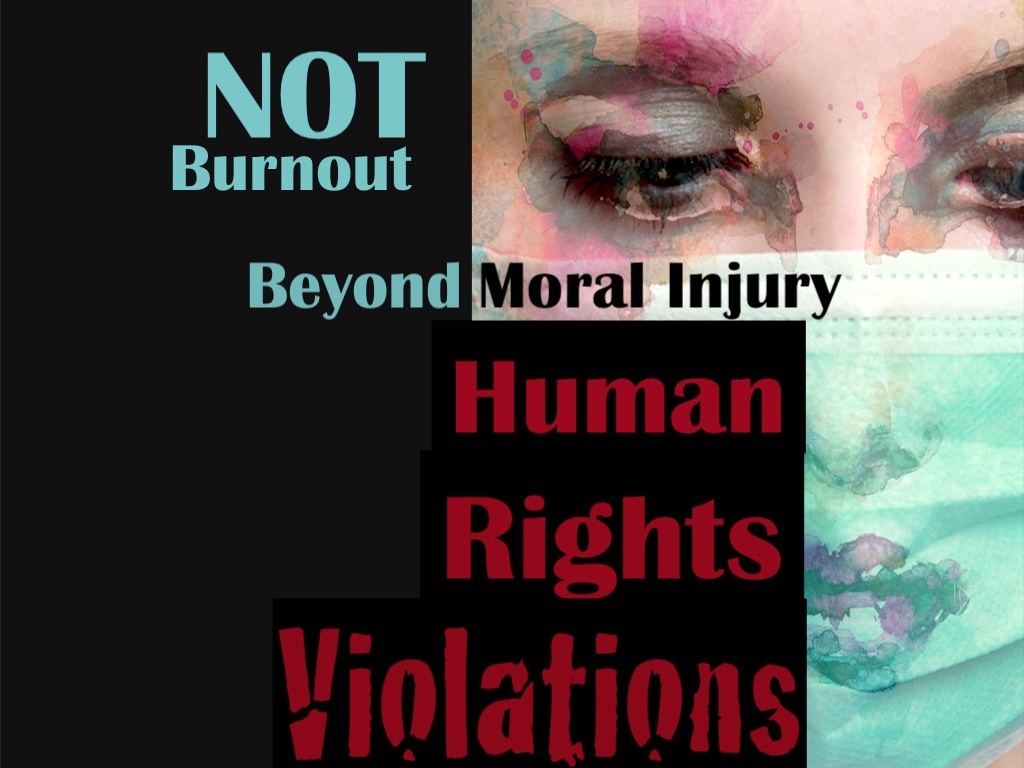
This post goes beyond the surface-level burnout conversation and explores a deeper truth: what if the problem isn’t burnout—or even moral injury—but human rights violations inside the medical system itself?

Burnout is a slang word for end-stage drug addiction first used on the streets of inner city America in the early 1970s. During that time, psychologist Herbert Freudenberger volunteered at a New York City free clinic treating addiction. He overheard the term and used it to describe himself and clinic staff in a 1974 article on staff burnout detailing long-term physical and psychological job stress.
He then authored a book on burnout in overachievers and another on burnout in women further popularizing the slang word which seeped into common lexicon. Burnout was no longer limited to Americans overdosing in back alleys. Now housewives and high achievers and anyone stressed at work suffered from burnout too. Read more ›